



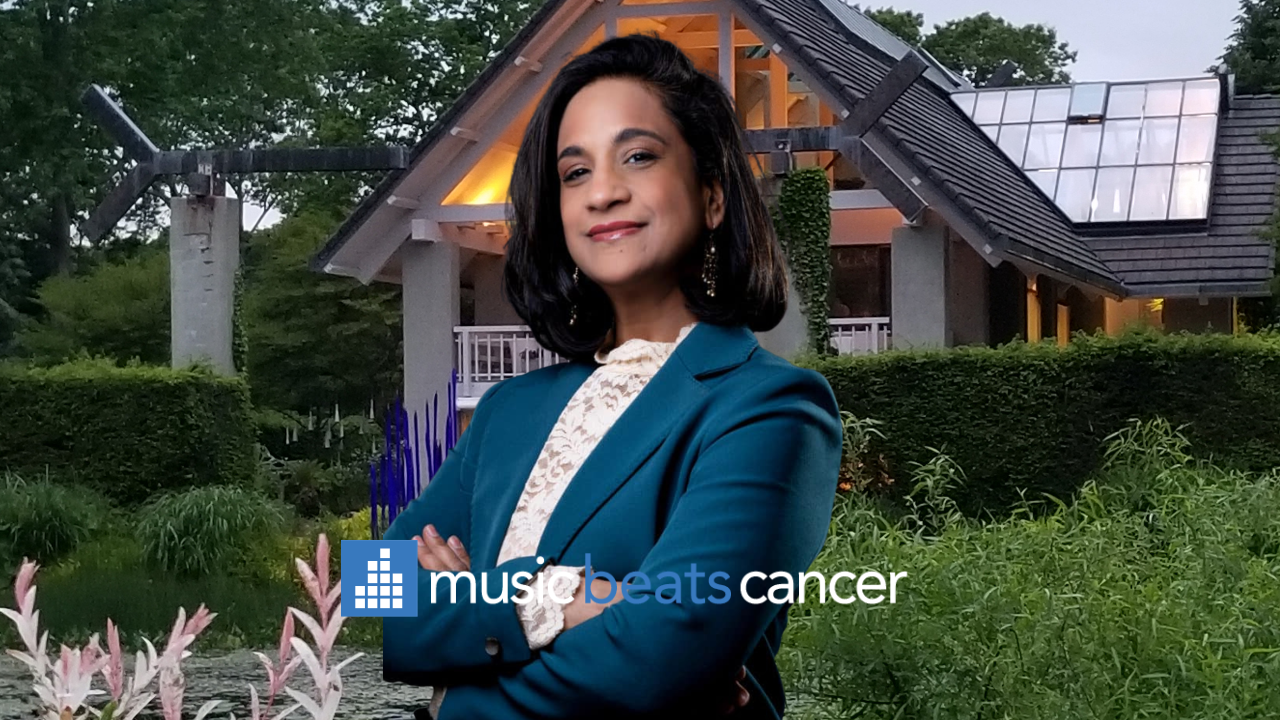
Music Beats Cancer: Music Provides Hope
Every significant medical breakthrough begins with a single idea, yet in the realm of cancer research, such discoveries mark only the beginning of a protracted and frequently uncertain journey. A promising scientific finding may demonstrate great potential within a lab setting, but evolving that discovery into a therapy that can eventually benefit patients necessitates many years of continued research, development, testing, regulatory work, and, perhaps most critically, funding. Dr. Mona S. Jhaveri, Ph.D., founder and executive director of Music Beats Cancer, truly understands this challenge from a perspective few others possess. Her career trajectory has taken her from the depths of cancer research laboratories to the world of biotechnology entrepreneurship, ultimately leading her into the nonprofit sector, where she is diligently working to tackle one of the most significant hurdles facing early-stage cancer innovation.
The Journey of Dr. Mona Jhaveri
Dr. Jhaveri’s career began with an immersion in science. She earned her doctorate in biochemistry from the Bowman Gray School of Medicine at Wake Forest University and pursued further training as a postdoctoral fellow at the National Cancer Institute. With a SPORE Fellowship Award for Breast Cancer Research from Georgetown University’s Lombardi Cancer Center, she later ventured into intellectual property and technology transfer at the Ludwig Institute for Cancer Research. These varied experiences imparted to her not just a deep understanding of cancer biology, but also insights into the complex process of transitioning scientific discoveries from laboratories toward commercial and clinical development.
From Biotechnology to a New Nonprofit Venture
Dr. Jhaveri’s journey took a personal turn in 2005 when she founded Foligo Therapeutics, a biotechnology company aimed at developing and commercializing a DNA-based therapeutic compound with potential as a treatment for ovarian cancer. The company generated promising early proof-of-principle research. However, like many burgeoning biotech ventures, Foligo hit a roadblock that scientific expertise alone could not resolve: a lack of capital. Devoid of sufficient funding to continue its work, the company had to close its lab and research operations in 2010. This experience was a pivotal moment for Dr. Jhaveri, as it illustrated firsthand that promising medical innovations could vanish not due to any failure of the underlying science, but because the requisite resources to further develop them had dissipated.
Navigating the ‘Valley of Death’
In the world of biotechnology, this funding gap is often called the ‘Valley of Death,’ a challenging phase encountered between an initial scientific discovery and the juncture at which a technology becomes advanced enough to attract more substantial institutional investors, pharmaceutical companies, or other financial sources. While the public frequently hears of billions dedicated to cancer research, far less attention is directed toward what happens after a promising discovery is made. Developing potential cancer treatments demands extensive testing, securing intellectual property, developing manufacturing processes, obtaining regulatory approvals, conducting clinical trials, and securing vast amounts of capital. For small biotech companies and scientific entrepreneurs, obtaining enough funding to survive those early stages remains just as crucial as the science itself.
The Birth of Music Beats Cancer
After her experience with Foligo Therapeutics, Dr. Jhaveri decided to approach the issue from a broader perspective. Recognizing that if her company struggled with crossing this funding gap, countless other scientists and entrepreneurs likely faced similar obstacles, she set out to address this issue through the creation of Music Beats Cancer. This nonprofit organization strives to alleviate the funding bottleneck stalling entrepreneurs who are developing innovative cancer-fighting solutions.

Thumbs up for a Cure!
Thumbs Up for a Cure is a one-of-a-kind afternoon gathering set in the magical gardens of LongHouse Reserve in East Hampton, bringing together children, families, biotech innovators, clinicians, philanthropists, and supporters of childhood cancer research for an unforgettable tea time with live jazz.
Kids Q&A: Children take the lead – asking bold, honest questions to biotech innovators developing promising new treatments for pediatric cancers and casting their votes with a simple thumbs up or thumbs down. Their voices cut through the complexity, bringing clarity, urgency, and heart to the innovations that matter most, while guests are invited to join the conversation through their philanthropic support, directly helping advance promising breakthroughs on the Music Beats Cancer platform.
Jazz Performance: The afternoon will feature a special live musical performance by renowned, Grammy-nominated and Doris Duke-awarded, jazz artist Yosvany Terry, creating a magical setting where innovation, community, music, and culture come together in support of children with cancer.Bridging the Worlds of Science and Music
What sets Music Beats Cancer apart is its unique blending of two seemingly disparate worlds: scientific innovation and music. Dr. Jhaveri realized that music wields an extraordinary power to connect people, forge communities, and disseminate ideas beyond the traditional confines of the scientific and medical establishments. By engaging musicians, artists, supporters, cancer advocates, patients, families, scientists, and entrepreneurs, Music Beats Cancer builds a bridge between those pioneering new technologies and the public who ultimately stand to gain from medical advancements. The organization aims to make cancer innovation more accessible and provides individuals with an avenue to directly support entrepreneurs pushing forward promising solutions.

Challenging Traditional Funding Paths
This approach challenges the conventional notion that funding medical innovation is predominantly the domain of pharmaceutical firms, venture capitalists, universities, government agencies, and large foundations. Music Beats Cancer introduces a fresh perspective that ordinary individuals can play a part in propelling early-stage innovation forward. By sharing stories about emerging technologies and the entrepreneurs behind them, the organization transforms complex scientific concepts into ideas that people can easily understand and support. The underlying message is straightforward: Cancer innovations with potential deserve a chance to demonstrate their worth, and an initial lack of funding should not solely determine which ideas prosper.
Dr. Mona Jhaveri’s Impact
Dr. Jhaveri’s personal journey adds special significance to Music Beats Cancer’s mission. She has observed cancer innovation from nearly every perspective—be it as a scientist, researcher, biotechnology entrepreneur, intellectual property professional, or nonprofit leader. Most importantly, she has experienced the frustration of watching promising research face financial roadblocks. Rather than viewing this as merely a business setback, she perceived it as indicative of a larger systemic problem and responded by creating an organization designed to assist other innovators in navigating the challenges she once faced.
Looking Toward the Future
Music Beats Cancer’s mission invites us to ponder an important question about the future of cancer treatment. Somewhere, today, a scientist or entrepreneur may already be working on a technology with the potential to transform how a certain type of cancer is detected, treated, or managed. The scientific concept might exist, and early results may show promise, but without the necessary resources for continued development, patients might never benefit from it. Through Music Beats Cancer, Dr. Mona Jhaveri is determined to ensure more of these ideas are given a chance.
Her story transcends that of a single scientist or nonprofit organization. It underscores the urgency of reducing the gap between discovery and opportunity and recognizes that identifying the next cancer breakthrough constitutes only part of the challenge. Society must also devise methods for promising innovations to navigate the arduous path from laboratory development to benefiting the individuals who need them most. By uniting science, entrepreneurship, philanthropy, music, and public engagement, Dr. Mona Jhaveri and Music Beats Cancer aspire to build that bridge—and potentially aid tomorrow’s cancer breakthroughs in surviving long enough to change lives.
