


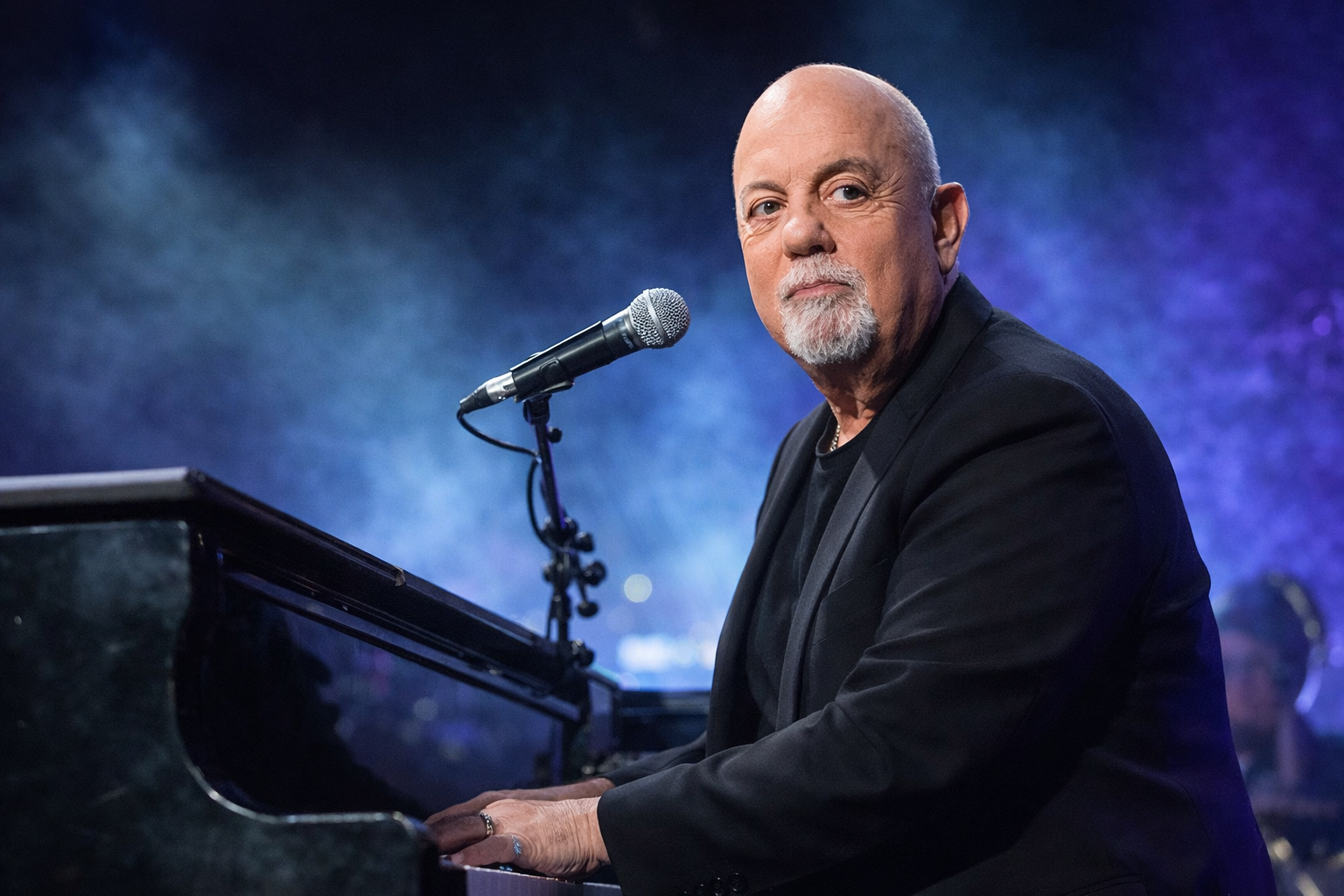
The Piano Man Surprises at the 88 Keys
Billy Joel’s Triumphant Return to the Stage
When Billy Joel took his place behind the piano at Madison Square Garden for the first time since a life-changing diagnosis, the crowd could hardly contain its excitement. The music industry, Joel’s devoted fanbase, and culture at large held their collective breath to see how the legendary musician would fare after his recent battle with a brain disorder. And if the opening notes of “My Life” were any indication, the Piano Man had indeed returned—not just to perform, but to reclaim his legacy under the spotlight.
On January 2, 2026, the 76-year-old singer-songwriter surprised everyone with a powerhouse performance that not only defied expectations but reignited passion within generations of fans. His presence on stage was more than a symbol of resilience; it became a moment cemented in the annals of music history. This comeback wasn’t just about playing music. It was about healing, legacy, and reminding the world that Billy Joel still had a voice that mattered.
Overcoming a Silent Struggle: The Diagnosis
In mid-2025, reports surfaced confirming that Billy Joel had been quietly battling a brain disorder, the specifics of which were initially undisclosed. Concerns grew when longtime fans noted canceled tour dates and limited public appearances. For a man whose career thrived on live energy—punctuated by nearly monthly concerts at Madison Square Garden—the silence was deafening.
Later updates clarified that while Joel faced a complex neurological condition, he had responded positively to treatment and was determined to return to the stage. Sources close to the musician confirmed to TMZ that Joel had faced speech challenges and motor skill hurdles—a daunting reality for any performer, let alone a piano virtuoso known for his dramatic flair and lyrical dexterity. Yet behind the scenes, Joel had been undergoing rigorous therapy and practice, focused on readiness for a live comeback worthy of his decades-spanning career.
Madison Square Garden: A Sacred Space
There’s no venue more synonymous with Billy Joel’s modern career than Madison Square Garden. Dubbed the “King of the Garden,” Joel has held a historic residency at the venue since 2014, amassing over 100 performances there and setting attendance records along the way. His partnership with the landmark venue transformed it into more than just a concert space—it became an extension of his musical identity.
When Joel announced he would return to the Garden for an unannounced, surprise performance to ring in the new year, whispers spread through New York City like wildfire. Fans, some of whom had grown up on Joel’s music, flocked to the arena. His entrance wasn’t just about musical prowess—it was symbolic, emotional, and deeply cathartic, both for the singer and those who had followed his storied journey.
A Setlist for the Ages
Knowing that fans expected something unforgettable, Joel curated a setlist that blended his greatest hits with a few emotional surprises. From “Only the Good Die Young” to “Scenes from an Italian Restaurant,” the songs unfolded like a greatest-hits showcase infused with newfound poignancy. Each note felt heavier, more important, and layered with meaning.
Perhaps the most stirring moment of the evening came during the performance of “We Didn’t Start the Fire.” Long a karaoke favorite, the song’s rapid-fire references took on new gravity as Joel revised the lyrics to reflect the evolving history since its release. Strikingly, several of those referenced in the song have now passed away—including Brigitte Bardot, whose recent death prompted Joel to acknowledge that only three individuals mentioned in the song remain alive. That moment—the recognition of time’s toll and mortality—gripped the audience with awe and reverence.
Vocal Strength and Musical Technique: Still Got It
Despite the medical setbacks, reviews from those in attendance unanimously applauded Joel’s technical performance. While some noticed subtle changes in tempo or vocal strain, most agreed it only added depth and authenticity to his voice. Parade Magazine noted how Joel leaned into his imperfections, letting the rawness of his tone amplify the vulnerability he’s always managed to hide beneath wordplay and melody.
His command over the piano remained crystalline. From jazz-infused riffs to melancholic gospel runs, Joel’s fingers danced across the keys with intent. While he moved more deliberately at times, he never appeared weakened—only more resolved. That strength formed the emotional core of the evening and served as undeniable proof that Billy Joel, through hardship and recovery, remained a titan of live performance.
Fan Reactions and Cultural Echoes
After the last echoes of applause drifted into the rafters, social media lit up. Thousands of attendees took to platforms like X and Instagram to share their awe at witnessing a historic return. Fans spoke of visible tears, moments of embrace between strangers, and cheers that drowned out the sound system. Words like “goosebumps,” “moving,” and “transcendent” trended well into the early hours of 2026.
Music critics echoed this sentiment. The New York Post lauded the performance as “a masterclass in resilience,” affirming Joel’s role as a cultural historian whose lyrics have become woven into the fabric of American identity. For many, the performance felt like closure to a worrisome chapter, assurance that their beloved Piano Man was still part of the story they were living.
The Power of Legacy in Uncertain Times
What gives this return even more meaning is its timing. With the world continuously reshaped by global pandemics, political turbulence, and social transformation, Joel’s music speaks to a generation longing for emotional continuity. His catalog—filled with songs about love, regret, struggle, triumph, and introspection—resonates now more than ever.
Even as younger generations discover artists through digital platforms, Joel’s analog authenticity cuts through the noise. Re-examined under today’s lens, the lyrics to songs like “Vienna” and “New York State of Mind” feel prophetic. They echo inward reflection and human resilience, themes particularly relevant during uncertain times. His unannounced return in early January was more than a concert; it was a universal exhale—a reminder of the enduring power of music to connect and heal.
Behind the Scenes: The Team That Made It Happen
Joel’s triumphant return wouldn’t have been possible without a devoted team working tirelessly in support. His family, particularly his daughters, played a meaningful role in his motivation. Friends and industry veterans rallied behind the scenes, offering everything from logistical coordination to emotional support.
His longtime bandmates—many of whom have been with him since the 1970s—stood by him every step of the way. Insiders report that rehearsals were carefully managed, with modified arrangements allowing Joel to build endurance without excessive strain. The respect among the musicians, grown from decades of collaboration, was palpable throughout the night.
Medical professionals also deserve credit, having helped Joel regain the physical competencies required for a nearly two-hour live performance. His openness to working through the challenges only enhances the admiration so many already had for him. It illustrates that resilience, when paired with vulnerability, makes comeback stories unforgettable.
A Future Fueled by Passion
While Joel has made no public commitment about future tours, insiders suggest he may consider select performances throughout 2026. Still dedicated to his MSG residency, there’s hope among fans that this triumphant return signals a broader continuation of Joel’s performance legacy, albeit perhaps at a more tempered pace.
Sources close to the artist told Parade that Joel is “more energized than he’s been in years,” adding that writing sessions have not been ruled out. Whether or not a new album emerges, his commitment to live music remains evident. With standing ovations echoing through the Garden, it’s clear that if he wants to keep playing, the world will keep listening.
Closing Thoughts: A Melodic Reminder
Billy Joel’s journey through adversity and his return to the stage is a masterclass in dignity and passion. In an age when fame often flickers out with fleeting attention spans, Joel has proved once again that artistry rooted in sincerity endures. His music has always reflected the times—sometimes satirizing, sometimes aching—but it has also guided listeners through their own lives.
In January 2026, Joel gave his audience more than an iconic performance. He offered them reassurance—of continuity, creativity, and the ability of the human spirit to keep playing, even after life throws us off-beat. We didn’t start the fire, no—but watching Joel return illuminated a truth at the heart of his music: we can survive it.
As the lights dim on this chapter, one thing remains clear. The Piano Man is not done yet. And for that, we are all profoundly grateful.
